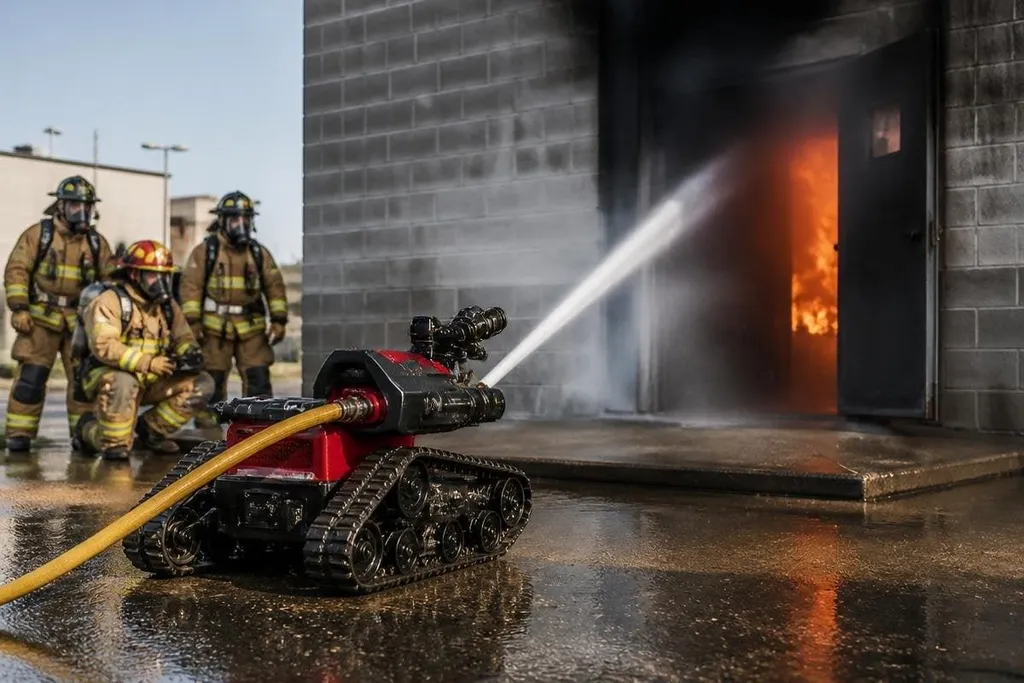
A firefighting robot can enter a burning building before a person can safely reach the same area. Its value comes from distance: crews can send cameras, sensors, and water into a hot zone while they stay outside.
That distance also creates the main limit. It may find a fire or cool a room, but people still decide where to go, which hose line to use, and when the building is safe enough to enter.
- Remote control keeps crews farther from heat, smoke, and falling debris.
- Thermal cameras can show hot areas through smoke that blocks normal vision.
- Tracks, hoses, and radio links can fail when the building damages the route.
What the robot does inside
Firefighting robots usually carry a camera, a thermal camera, or both. The normal camera shows the scene in visible light; the thermal camera shows heat patterns, which can help crews find a fire behind smoke or locate a person.
Many ground robots use tracks instead of normal wheels. Tracks spread the robot’s weight across a wider area and help it cross broken floors, door thresholds, and loose material. That does not make every building passable. Stairs, narrow doorways, and collapsed sections can stop the robot before it reaches the fire.
A water or foam nozzle lets the crew act from a remote position. The robot may aim the stream through a camera feed, while a hose supplies water from outside. This can reduce the time a firefighter spends near the flame front, but the robot still needs a clear route and enough water pressure.
The benefits are practical
The first benefit is exposure control. A robot can check a room with high heat or thick smoke before a firefighter crosses the doorway. That information can change the entry plan and may keep a crew out of a failing structure.
The second benefit is a steady position for the nozzle. A tracked robot can hold its place while sending water toward a fire. A person carrying the same hose may need to work closer to the heat, where visibility and footing are worse.
Robots can also help after the main fire. Thermal cameras may find hot spots that need more water, while cameras can inspect damaged areas before crews enter.
For a fire department, that can make a robot useful across several parts of one call rather than during the first attack alone.
That broader role also raises harder questions about control, sensor limits, and crew safety. Reports on firefighting robots from Robot24.com can put those concerns beside named machines, test settings, and operating limits before the article turns to where the risks start.
Where the risks start
Remote control adds a new failure point. Smoke, concrete walls, metal structures, and damaged power systems can weaken the radio link. If the signal drops, the crew may lose video, steering, or nozzle control at the worst moment.
Heat can damage the robot’s electronics, cameras, seals, and drive parts. A fire department needs clear limits for temperature, water exposure, battery life, and recovery. A robot that stops in a doorway can block people, hoses, or another vehicle.
Training creates another risk. Crews must learn the controls, read the camera feed, manage the hose, and keep track of the robot’s position. A machine that needs one person to drive and another to manage water may add workload instead of reducing it.
The robot can also give a false sense of knowledge. A thermal image shows heat, not the full condition of a ceiling, floor, gas line, or wall. The crew still needs building information and direct judgment before entering.
A purchase checklist for fire departments
Use these questions before buying or testing a firefighting robot:
- Route: Can it cross the floors, thresholds, stairs, and debris found in your buildings?
- Heat: What temperature limit applies to the robot, camera, battery, and hose fittings?
- Control: How does the system behave when the radio link weakens or drops?
- Water: Does the nozzle work with your existing hose lines, pumps, and foam supply?
- Recovery: Can firefighters move the robot if it loses power in a doorway?
- Training: Can the crew practice with smoke, low light, hose drag, and blocked routes?
What comes next
The best use for a firefighting robot is a task with a clear benefit and a clear fallback. It can check a hot room, send water from a safer position, or inspect a damaged site. It cannot replace building knowledge, command decisions, or a trained crew.
I'd buy one only after testing those failure cases with the department’s own hoses, buildings, radios, and procedures. The deciding question is simple: when the robot stops working, can the crew still finish the job safely?